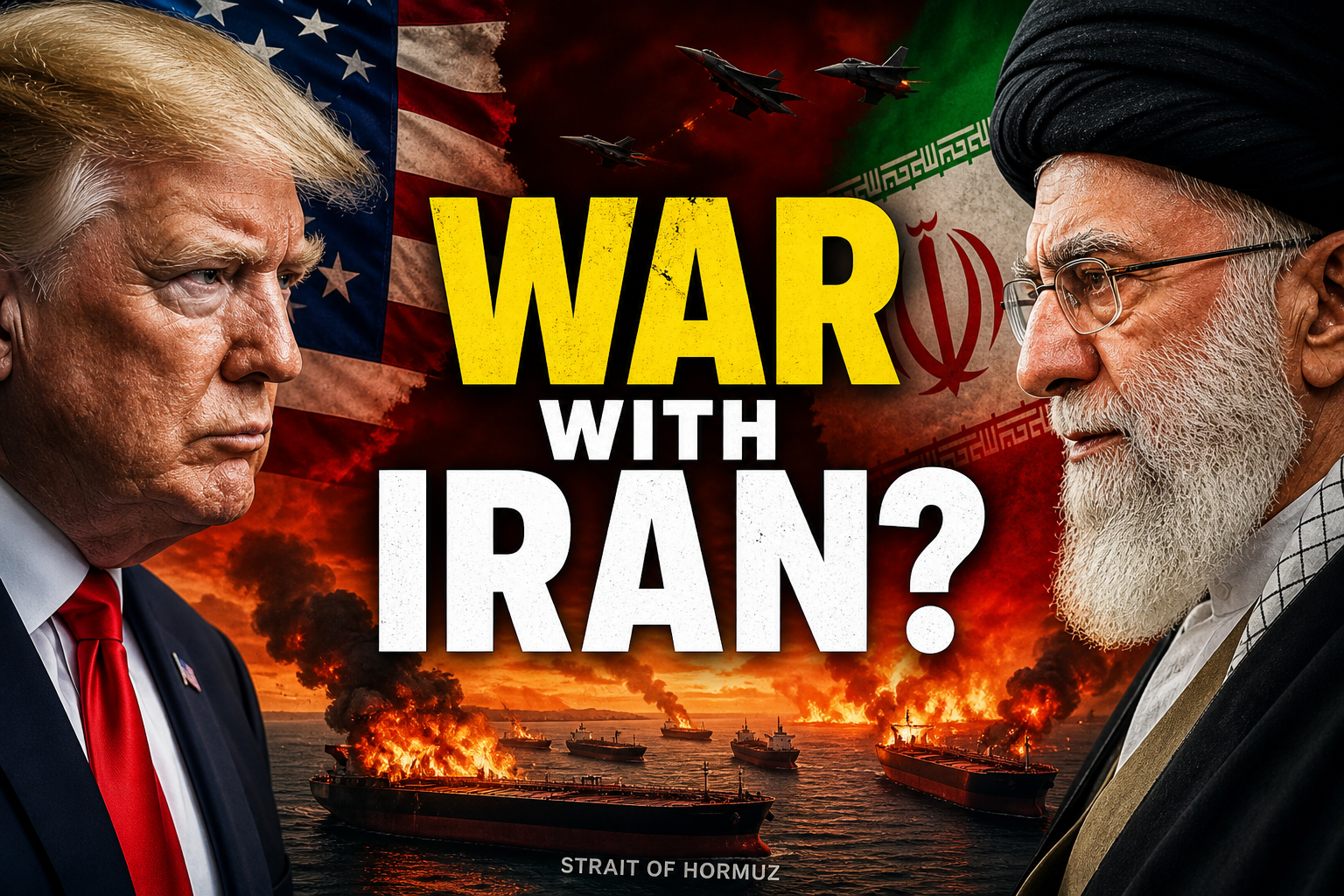
Understand Trump’s war with Iran in 2026. Explore causes, latest updates, oil crisis, Strait of Hormuz tensions, and what could happen next in this global conflict.
Introduction
The world in 2026 is witnessing one of the most dangerous geopolitical crises in decades: the escalating conflict between the United States and Iran under President Donald Trump. What started as targeted military strikes has rapidly evolved into a complex confrontation involving naval blockades, proxy conflicts, economic warfare, and global energy disruption.
Despite claims from the Trump administration that “hostilities have ended,” the reality is far more complicated. A fragile ceasefire, ongoing military pressure, and stalled diplomacy have left the world on edge—uncertain whether peace is possible or if a larger war is imminent.
This article breaks down everything you need to know: how the conflict started, what’s happening now, why it matters globally, and what could happen next.
What Started Trump’s War with Iran?
1. Rising Tensions Before 2026
The roots of the conflict go back years, but tensions sharply escalated in early 2026.
- The U.S. accused Iran of pursuing nuclear weapons and supporting militant groups
- Iran denied nuclear ambitions but expanded missile capabilities
- Trump repeatedly warned of “massive destruction” if Iran didn’t comply
By February 2026, diplomacy had failed—and war became inevitable.
2. The Trigger: February 28, 2026
The war officially began when:
- The U.S. and Israel launched coordinated airstrikes on Iran
- Targets included nuclear facilities, military bases, and leadership structures
- Iran retaliated with missiles and drones targeting U.S. allies
This marked the start of what is now called the 2026 Iran War.
Timeline of Key Events (2026)
| Date | Event | Impact |
|---|---|---|
| Jan–Feb 2026 | U.S. military buildup | Increased regional tension |
| Feb 28, 2026 | U.S.-Israel strikes on Iran | War begins |
| March 2026 | Iranian retaliation | Regional escalation |
| April 7, 2026 | Ceasefire announced | Temporary pause |
| April 13, 2026 | U.S. naval blockade begins | Economic warfare |
| May 1, 2026 | Trump claims hostilities “terminated” | Political controversy |
What Is Happening Right Now (May 2026)?
1. A “Ceasefire” That Isn’t Really Peace
President Trump has claimed that hostilities are over. However:
- U.S. forces remain deployed
- Naval operations continue
- Iran is still under economic and military pressure
Critics argue the war is ongoing in practice, not officially declared
2. The Naval Blockade: The Real Battlefield
One of the most important developments is the U.S. naval blockade of Iran.
- U.S. forces are intercepting ships and oil exports
- Iran is losing hundreds of millions of dollars daily
- Iran has retaliated by disrupting the Strait of Hormuz
This has turned the conflict into an economic war over oil and trade routes.
3. Strait of Hormuz Crisis
The Strait of Hormuz is critical:
- Carries ~20% of global oil supply
- Iran has restricted access
- Global shipping and energy markets are disrupted
This is why oil prices have surged—and why the conflict affects everyone, even outside the Middle East.
4. Stalled Peace Talks
Negotiations are currently deadlocked:
- Iran wants phased talks (war → blockade → nuclear issue)
- Trump insists nuclear issues come first
- Both sides reject each other’s conditions
Result: No clear path to peace
Key Causes of the Conflict
1. Nuclear Dispute
At the heart of the conflict:
- U.S.: Stop uranium enrichment completely
- Iran: Maintain nuclear sovereignty
This disagreement remains unresolved.
2. Regional Power Struggle
Iran vs U.S. influence in:
- Iraq
- Syria
- Yemen
- Lebanon
The war is not just about Iran—it’s about control of the Middle East.
3. Economic Warfare
Sanctions + blockade = pressure strategy
- Iran loses billions in oil revenue
- U.S. aims to force political concessions
- Iran adapts through smuggling networks
Human and Economic Impact
1. Humanitarian Crisis
- Thousands killed
- Millions displaced
- Infrastructure destroyed
- Civilian hardship increasing
Inside Iran:
- Internet shutdowns
- Restricted movement
- Rising repression
2. Global Economic Shock
| Sector | Impact |
|---|---|
| Oil Prices | Sharp increase |
| Shipping | Disruptions |
| Inflation | Rising globally |
| Gas Prices (U.S.) | Political backlash |
The war has become a global economic issue, not just a regional conflict.
Political Fallout in the U.S.
1. War Powers Controversy
Trump declared hostilities “terminated” to avoid:
- The 60-day War Powers deadline
- Congressional approval requirements
Lawmakers argue this is unconstitutional
2. Domestic Political Risk
- Rising fuel prices hurting voters
- Growing opposition from both parties
- Potential impact on elections
Analysts warn the war may hurt Trump politically
Why the War Hasn’t Ended
1. No Clear Victory
- U.S. hasn’t stopped Iran’s influence
- Iran hasn’t been defeated
- Both sides claim success
2. Iran’s Resilience
Despite heavy losses:
- Leadership quickly replaced
- Military still operational
- Economic networks still functioning
3. Strategic Deadlock
Experts call it a “frozen conflict”:
- Too costly to escalate
- Too complex to resolve
What Happens Next? (Future Scenarios)
Scenario 1: Renewed War
- Ceasefire collapses
- Full-scale military conflict resumes
- Risk of regional war increases
Iran has already warned it is “fully prepared” for escalation
Scenario 2: Prolonged Standoff
Most likely outcome:
- Continued blockade
- Occasional clashes
- No formal peace
This could last months—or years.
Scenario 3: Diplomatic Breakthrough
Possible but unlikely:
- Compromise on nuclear program
- Lifting of blockade
- International mediation
Scenario 4: Regime Change in Iran
Some U.S. rhetoric suggests:
- Internal instability
- Leadership shifts
But this is highly uncertain and risky.
Global Implications
1. Middle East Instability
Countries affected:
- Saudi Arabia
- UAE
- Israel
- Iraq
The entire region is on edge.
2. Energy Crisis
- Oil supply disruption
- Higher global prices
- Economic slowdown
3. New Cold War Dynamics
The conflict is reshaping alliances:
- U.S. vs Iran
- Europe caught in between
- China & Russia watching closely
Key Takeaways
- The war began with U.S.-Israel strikes in February 2026
- A ceasefire exists—but conflict is still ongoing
- The naval blockade is the main battleground
- Peace talks are stalled with no clear resolution
- The conflict has major global economic consequences
- Future outcomes remain highly uncertain
Final Thoughts
Trump’s war with Iran is not a simple military conflict—it’s a multi-layered geopolitical crisis involving energy, economics, politics, and global security.
While headlines may suggest the war is over, the reality is far more complex. The situation today is best described as a tense pause between conflicts, not a lasting peace.
The world now waits for what comes next—renewed war, prolonged stalemate, or a fragile diplomatic breakthrough.