Strait of Hormuz Crisis 2026: Impact on Global Oil Prices, Inflation & Economy
Explore how the Strait of Hormuz shipping crisis is driving global oil prices, inflation, and economic uncertainty in 2026. Expert insights, data, and future predictions.
Introduction
The Strait of Hormuz shipping crisis has become one of the most critical global economic events of 2026. This narrow waterway, located between Iran and Oman, is responsible for transporting nearly 20% of the world’s oil supply, making it one of the most important energy chokepoints on Earth.
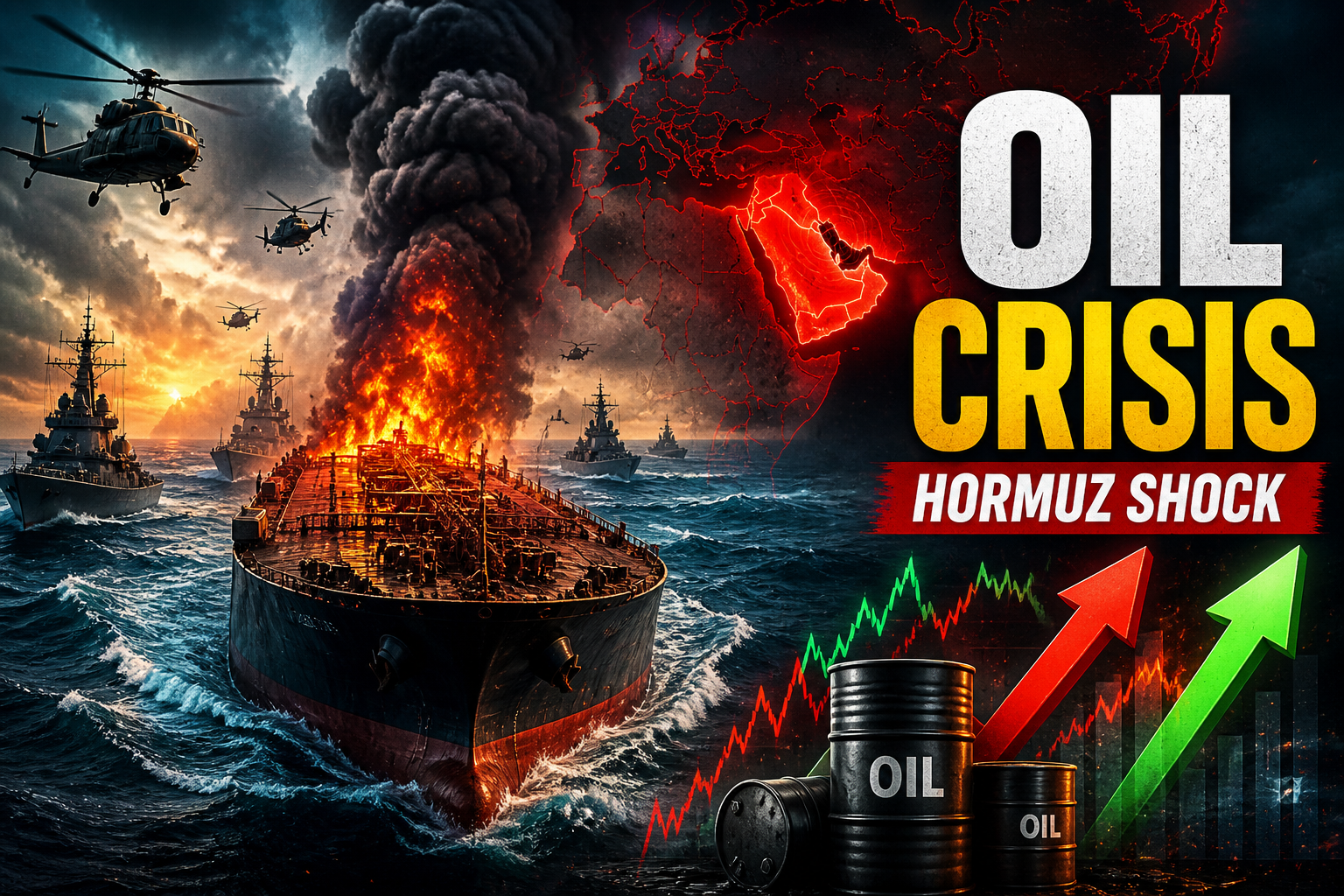
In recent months, escalating geopolitical tensions—especially the ongoing conflict involving Iran and Western powers—have severely disrupted shipping through this strategic route. Tanker traffic has dropped drastically, and oil exports from major producers like Saudi Arabia, Iraq, and Kuwait have been heavily constrained.
As a result, global oil prices have surged dramatically, crossing $120 per barrel and reaching multi-year highs.
But what does this crisis really mean for global oil prices, economies, and everyday consumers? Let’s break it down in detail.
What Is the Strait of Hormuz and Why It Matters
The Strait of Hormuz is not just another shipping route—it is the lifeline of the global energy market.
Key Facts:
- Handles around 20% of global oil and LNG trade
- Connects the Persian Gulf to international markets
- Critical for major exporters: Saudi Arabia, UAE, Iraq, Kuwait, and Iran
- Essential for import-dependent nations like China, India, Japan, and Pakistan
Even a small disruption in this region can cause massive volatility in oil prices.
What Caused the 2026 Shipping Crisis?
The current crisis stems from a combination of geopolitical conflict, military tensions, and strategic blockades.
Main Triggers:
- U.S.-Iran Conflict Escalation
- Naval blockades restricting tanker movement
- Attacks on oil infrastructure
- Sanctions and retaliatory measures
Shipping activity has nearly collapsed, with reports showing that oil flows dropped by over 10 million barrels per day.
This has created what experts call the largest oil supply shock in modern history.
Immediate Impact on Global Oil Prices
1. Oil Prices Skyrocket
The most direct consequence is a sharp increase in oil prices.
- Brent crude surged above $120–$125 per barrel
- Prices are up nearly 80% in 2026 alone
Why? Because supply has been severely restricted while demand remains strong.
2. Supply Shock in Energy Markets
The crisis has removed millions of barrels from global supply chains.
- Over 90% of shipments disrupted at peak crisis levels
- Oil-producing nations unable to export efficiently
- Alternative routes limited and expensive
This imbalance between supply and demand is the core reason for rising prices.
3. Increased Market Volatility
Oil markets are now extremely unstable:
- Prices fluctuate daily based on geopolitical news
- Traders react to rumors of ceasefires or escalation
- Futures markets show extreme uncertainty
Even temporary reopening signals have failed to stabilize prices.
How the Crisis Affects Global Economies
1. Rising Inflation Worldwide
Higher oil prices directly lead to inflation.
- Increased fuel costs raise transportation expenses
- Food prices rise due to logistics costs
- Manufacturing becomes more expensive
Global inflation is expected to rise significantly, especially in developing countries.
2. Risk of Global Recession
Economic forecasts are becoming increasingly pessimistic.
- Global growth could fall to 1.7% if oil stays above $100
- Extreme scenarios could trigger a global recession
High energy costs reduce consumer spending and business investment.
3. Currency Instability
Countries dependent on oil imports face:
- Weakening currencies
- Increased trade deficits
- Rising debt levels
Emerging economies like Pakistan are especially vulnerable.
Impact on Key Regions
Asia
Asia is the most affected region due to heavy reliance on Middle Eastern oil.
- India and China face supply shortages
- Japan depends on Hormuz for 70%+ of its oil imports
Europe
Europe faces rising energy costs and:
- Increased reliance on alternative suppliers
- Higher natural gas prices
- Pressure on industrial production
United States
The U.S. is less dependent but still affected:
- Higher gasoline prices
- Oil companies facing supply disruptions
- Strategic reserves may be used
Long-Term Impact on Oil Prices
1. Structural Price Increase
Even if the crisis ends, prices may remain high due to:
- Supply chain disruptions
- Damaged infrastructure
- Delayed production recovery
Experts say normalization could take months or even years.
2. Shift in Global Energy Trade
Countries are now:
- Diversifying supply routes
- Investing in alternative pipelines
- Increasing domestic production
Saudi Arabia, for example, is rerouting oil via the Red Sea.
3. Acceleration of Renewable Energy
High oil prices are pushing governments to:
- Invest in solar and wind energy
- Reduce dependence on fossil fuels
- Promote electric vehicles
What Happens If the Strait Remains Closed?
If disruptions continue:
- Oil prices could exceed $150 per barrel
- Global recession becomes highly likely
- Supply shortages worsen
- Inflation spikes further
Economic institutions warn of record-high oil prices in prolonged scenarios.
What Happens If the Strait Reopens?
Even reopening won’t instantly fix the situation:
- Supply chains need time to recover
- Shipping congestion will occur
- Prices may remain elevated
Markets expect a slow normalization process rather than immediate relief.
Impact on Everyday Consumers
The crisis is already affecting people worldwide:
1. Higher Fuel Prices
Petrol and diesel costs are rising rapidly.
2. Expensive Goods
Everything from food to electronics is becoming costlier.
3. Increased Cost of Living
Households are facing financial pressure globally.
Impact on Businesses
1. Transportation and Logistics
Shipping costs have surged due to:
- Risk premiums
- Insurance costs
- Route diversions
2. Airlines
Airlines face higher fuel costs, leading to:
- Expensive tickets
- Reduced travel demand
3. Manufacturing
Industries dependent on energy are struggling with rising costs.
Role of OPEC and Global Policy Makers
OPEC+ has attempted to stabilize markets by increasing production.
- Planned output increase of ~188,000 barrels/day
However, this has limited impact because:
- Oil cannot be transported easily
- Infrastructure constraints remain
Central banks are also responding by:
- Raising interest rates
- Controlling inflation
Historical Comparison: Is This Another Oil Crisis?
Many analysts compare this situation to the 1970s oil crisis.
Similarities:
- Supply shock
- Rising inflation
- Economic slowdown
Differences:
- More interconnected global economy
- Greater reliance on shipping routes
- Advanced financial markets
Future Predictions (2026–2027)
Short-Term (Next 3–6 Months)
- Continued price volatility
- Oil above $100 per barrel
Medium-Term (6–12 Months)
- Partial stabilization if conflict eases
- Prices remain elevated
Long-Term (1–3 Years)
- Structural changes in global energy markets
- Increased investment in alternatives
Key Takeaways
- The Strait of Hormuz crisis is the biggest oil supply shock in decades
- Oil prices have surged above $120 due to supply disruptions
- Inflation, recession risks, and global instability are rising
- Even if resolved, the effects will last for years
Conclusion
The Strait of Hormuz shipping crisis is not just a regional issue—it is a global economic turning point. With nearly one-fifth of the world’s oil supply passing through this narrow waterway, any disruption sends shockwaves across energy markets, economies, and everyday life.
As geopolitical tensions continue, the world faces a harsh reality: energy security is more fragile than ever.
Whether the crisis resolves soon or drags on, one thing is certain—global oil prices will remain under pressure, and the economic consequences will shape the future of energy and geopolitics for years to come.