
Introduction: A Major Shift in Abortion Access
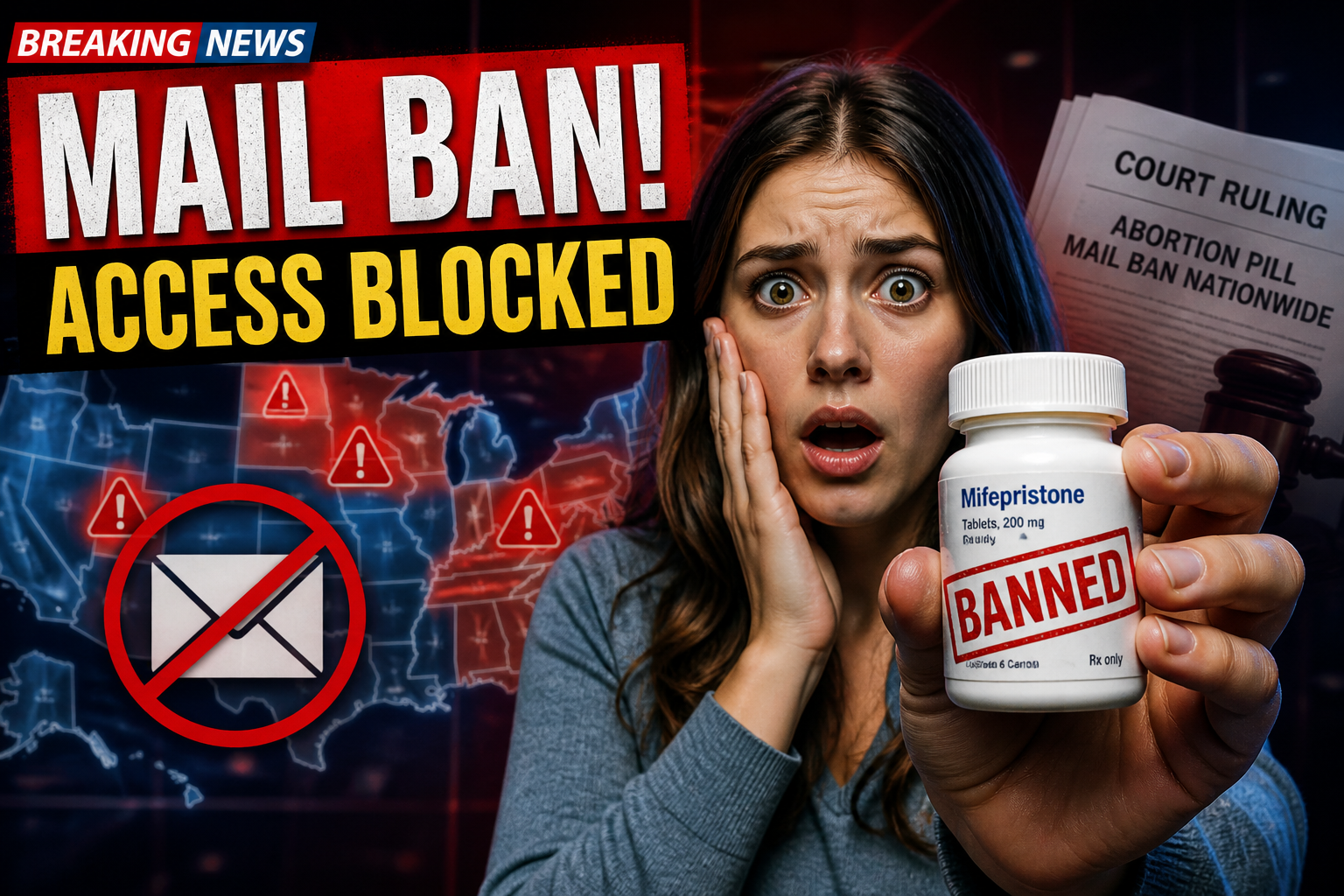
The debate over abortion in the United States has taken a dramatic new turn in 2026. The Mifepristone mail ban—a controversial legal development—has effectively blocked nationwide access to abortion pills via mail, disrupting one of the most widely used methods of reproductive healthcare.
For millions of people, especially those in remote or restrictive states, abortion pills by mail were not just convenient—they were essential. Now, with courts reinstating strict in-person requirements, access has become more difficult than ever.
This article breaks down everything you need to know about the abortion pill ban, including legal developments, healthcare impact, political implications, and what happens next.
What Is Mifepristone and Why Is It Important?
Mifepristone is one of the two drugs used in medication abortion, typically combined with misoprostol. It has been approved for use in the U.S. since 2000 and is considered safe and effective by major medical organizations.
- Used in early pregnancy termination
- Accounts for over 60% of abortions in the U.S.
- Can be prescribed via telehealth and mailed (until recently)
Medication abortion became even more critical after the 2022 Supreme Court decision overturning Roe v. Wade, which led to widespread state-level abortion bans.
Breaking News: What Happened in 2026?

Court restricts abortion access across the US by blocking the mailing of mifepristone

Drugmakers ask Supreme Court to restore abortion pill access by mail

Abortion pill makers ask US Supreme Court to restore mail-order access

Abortion pill maker asks US supreme court to halt ban on mail-order access
In May 2026, a U.S. federal appeals court issued a landmark ruling:
- Mail delivery of mifepristone was blocked nationwide
- Patients must now collect the drug in person at certified clinics
- Telehealth prescriptions for abortion pills were effectively halted
This decision came from the 5th U.S. Circuit Court of Appeals, following a lawsuit led by Louisiana officials.
According to reports, the court argued that the FDA did not sufficiently justify allowing mail distribution of the drug.
Why the Mifepristone Mail Ban Matters
This ruling is not just a legal technicality—it has massive real-world consequences.
1. Nationwide Impact
Although the lawsuit originated in Louisiana, the ruling applies across the entire United States, affecting even states where abortion remains legal.
2. End of Telehealth Abortion (For Now)
Before the ban:
- Patients could consult doctors online
- Pills were delivered discreetly by mail
Now:
- Patients must travel to a clinic
- Many will face long distances, wait times, and costs
3. Disproportionate Effects
The ban affects:
- Rural populations
- Low-income individuals
- Young women and students
Experts warn that access barriers could lead to unsafe alternatives or delayed care.
Legal Background: How Did We Get Here?
Post-Roe America
In 2022, the Supreme Court overturned Roe v. Wade, allowing states to regulate abortion independently.
This led to:
- Full bans in several states
- Increased reliance on medication abortion
- Growth of telehealth abortion services
FDA Rule Changes
The U.S. Food and Drug Administration had previously:
- Removed the in-person requirement in 2021
- Allowed pharmacies to dispense mifepristone in 2023
This made mail-order abortion pills widely accessible.
The Lawsuit That Changed Everything
Louisiana and other states argued:
- Mail distribution bypasses state abortion bans
- The FDA ignored potential risks
The court agreed—at least temporarily—leading to the current restriction.
Is the Ban Permanent?
No—this is a temporary ruling, but with immediate impact.
- Pharmaceutical companies like Danco and GenBioPro have filed emergency appeals to the Supreme Court
- The case could reach the Supreme Court again in 2026
- A final decision could either restore or permanently restrict access
Impact on Healthcare Providers and Pharmacies
Healthcare providers are facing:
- Legal uncertainty
- Disrupted telehealth services
- Confusion over compliance
Pharmacies that had begun offering abortion pills must now:
- Halt mail distribution
- Adjust to new regulations
This sudden shift has created nationwide confusion in the medical system.
What Are the Alternatives Now?
With the mail ban in place, patients are exploring other options:
1. In-Person Clinic Visits
- Required under new ruling
- May involve travel across state lines
2. Misoprostol-Only Regimen
- Less effective but still used
- May cause more side effects
3. Aid Networks and Advocacy Groups
Organizations continue to help patients navigate restrictions, though legal risks remain.
Political Reactions and Public Opinion
The ruling has sparked intense debate:
Supporters Say:
- It enforces stricter medical oversight
- Prevents misuse of abortion drugs
Opponents Argue:
- It undermines FDA authority
- It restricts safe, evidence-based care
- It disproportionately harms vulnerable populations
Major advocacy groups warn that this could set a precedent for challenging other FDA-approved medications.
SEO Insight: Why This Topic Is Trending
High-volume trending keywords include:
- Mifepristone mail ban
- Abortion pill ban 2026
- Telehealth abortion blocked
- Abortion pill access USA
- Roe v Wade aftermath
- FDA abortion pill ruling
This topic is trending because:
- It affects millions of people
- It intersects with politics, law, and healthcare
- It is currently evolving in real time
Global Perspective: Why the World Is Watching
Although this is a U.S.-based issue, it has global implications:
- Sets precedent for drug regulation vs. politics
- Influences abortion debates worldwide
- Raises questions about telemedicine access globally
Countries observing this case may reconsider their own policies on reproductive health and medication access.
Future Outlook: What Happens Next?
Several scenarios are possible:
1. Supreme Court Reversal
Mail access could be restored if the court rules in favor of the FDA and drugmakers.
2. Permanent Restrictions
If upheld, the ban could:
- Eliminate telehealth abortion nationwide
- Strengthen state-level abortion enforcement
3. Legislative Action
Congress or federal agencies may attempt to:
- Clarify drug distribution laws
- Protect telehealth access
Expert Analysis: A Turning Point in Healthcare Policy
Many legal experts believe this case is about more than abortion:
- It challenges the authority of the FDA
- It could open the door to lawsuits against other medications
- It reflects a broader shift toward judicial influence over healthcare policy
Conclusion: A Defining Moment for Reproductive Rights
The Mifepristone mail ban marks one of the most significant developments in reproductive healthcare since the fall of Roe v. Wade.
By blocking mail delivery of abortion pills, the ruling has:
- Reshaped access nationwide
- Sparked legal and political battles
- Raised critical questions about the future of healthcare in America
As the case moves toward the Supreme Court, the outcome will likely define the next era of reproductive rights—not just in the U.S., but globally.