Almukhtar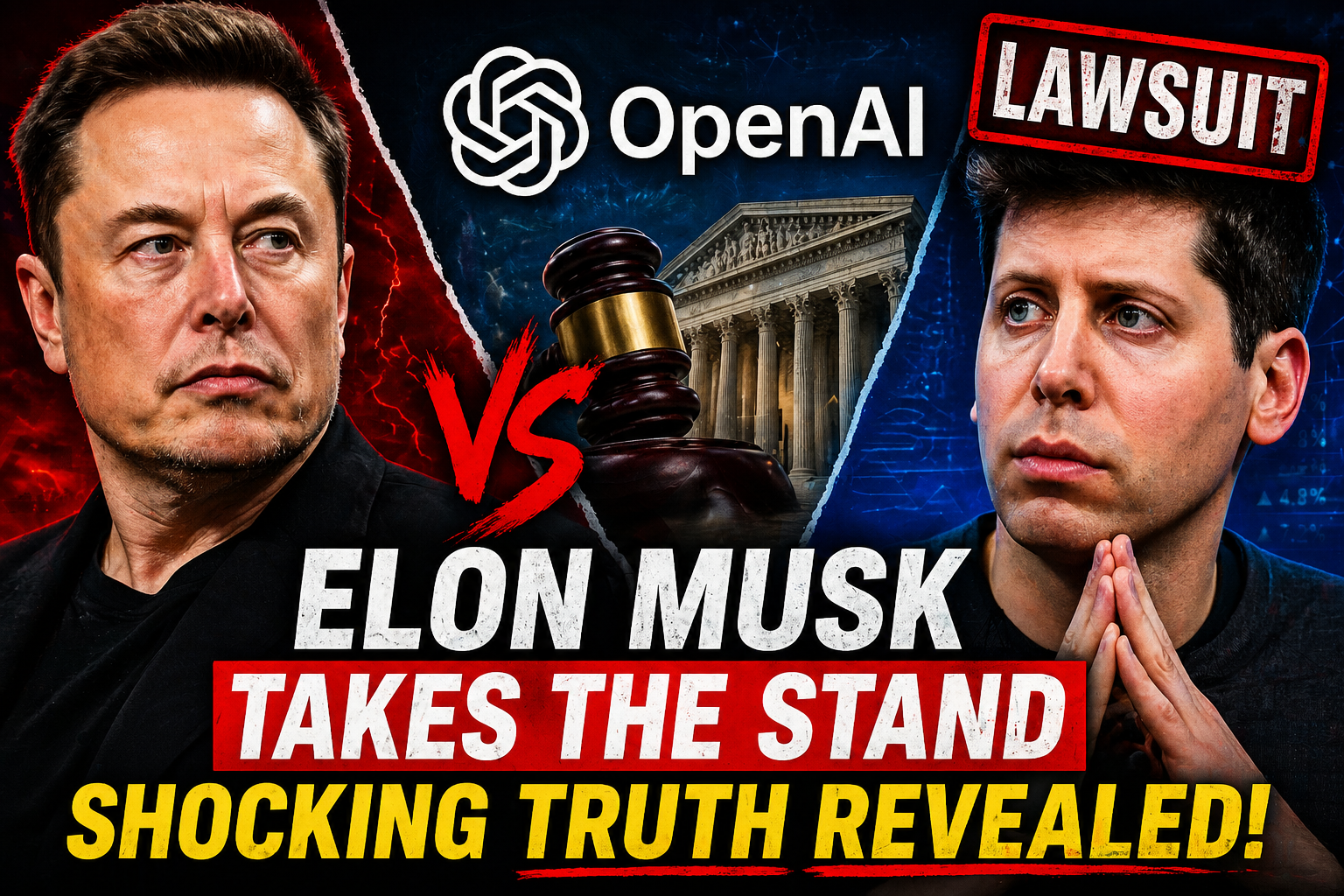
The tech world has been shaken by a high-stakes legal battle that could redefine the future of artificial intelligence. At the center of it all is Elon Musk, taking a firm stand against OpenAI—an organization he once helped create.
What started as a mission to build safe, transparent AI for humanity has now turned into a complex legal and philosophical conflict involving power, profit, and the future of one of the most transformative technologies ever created.
This isn’t just another tech lawsuit.
It’s a battle over who controls AI—and what it should become.
The Origins: When Elon Musk and OpenAI Were on the Same Side
To understand the lawsuit, we need to go back to the beginning.
OpenAI was founded in 2015 with a bold vision:
Ensure that artificial intelligence benefits all of humanity.
Key figures involved included:
- Elon Musk
- Sam Altman
- Other Silicon Valley leaders and researchers
At the time, Musk was deeply concerned about the risks of AI, frequently warning that unchecked development could pose existential threats.
OpenAI was originally structured as a non-profit organization, emphasizing:
- Transparency
- Open research
- Public benefit over profit
But that vision didn’t stay intact.
The Shift: From Non-Profit to “Capped Profit”
As AI development accelerated, OpenAI made a controversial move:
It transitioned into a “capped-profit” model.
This allowed the company to:
- Attract billions in funding
- Compete with tech giants
- Scale AI development rapidly
One of the most significant partnerships was with Microsoft, which invested heavily and integrated OpenAI technology into its ecosystem.
While this helped OpenAI grow, critics—including Musk—argue it marked a fundamental departure from its original mission.
Why Elon Musk Is Suing OpenAI
Musk’s legal argument centers around a key claim:
OpenAI has abandoned its founding principles.
Core Allegations:
1. Breach of Founding Agreement
Musk claims OpenAI was meant to remain:
- Open
- Non-profit
- Focused on public good
He argues the company’s current structure contradicts those commitments.
2. Profit Over Humanity
According to Musk, OpenAI is now:
- Prioritizing commercial success
- Restricting access to advanced AI
- Aligning too closely with corporate interests
This, he suggests, undermines the goal of democratizing AI.
3. Closed Development Model
Despite its name, OpenAI has become increasingly closed:
- Proprietary models
- Limited transparency
- Restricted access to cutting-edge systems
Musk argues this creates dangerous concentration of power.
OpenAI’s Response: A Different Perspective
OpenAI has pushed back strongly against Musk’s claims.
Their argument is built on practical realities:
1. AI Development Is Expensive
Training advanced AI models costs billions. Without a profit model, scaling would be nearly impossible.
2. Safety Requires Control
OpenAI argues that keeping models restricted is necessary to:
- Prevent misuse
- Avoid harmful applications
- Ensure responsible deployment
3. Mission Still Intact
Despite structural changes, OpenAI maintains that its core mission—benefiting humanity—remains unchanged.
The Bigger Conflict: Philosophy vs Reality
At its core, this lawsuit is not just legal—it’s ideological.
Musk’s Vision:
- Open-source AI
- Decentralized control
- Maximum transparency
OpenAI’s Approach:
- Controlled deployment
- Strategic partnerships
- Scalable infrastructure
Both sides raise valid concerns.
The real question is:
Can AI truly be both open and safe at the same time?
The Role of Microsoft: Power Behind the Scenes
Microsoft plays a crucial role in this story.
Through its partnership with OpenAI, Microsoft has:
- Integrated AI into products like Azure and Office
- Gained access to cutting-edge models
- Positioned itself as a leader in the AI race
Critics argue this creates:
- Centralized control over AI technology
- Competitive imbalance in the tech industry
Musk’s concerns are partly rooted in this growing concentration of power.
How This Lawsuit Could Reshape the AI Industry
The implications of this case go far beyond the companies involved.
1. Legal Precedents for AI Governance
The outcome could define:
- How AI companies are structured
- What obligations they have to the public
- Whether founding principles are legally enforceable
2. Open vs Closed AI Debate
This case could accelerate the divide between:
- Open-source AI movements
- Proprietary AI ecosystems
3. Investor Confidence
A major ruling could impact:
- Funding strategies
- Corporate partnerships
- Market competition
Public Reaction: Divided but Engaged
The tech community is deeply split.
Support for Musk:
- Advocates for transparency
- Critics of Big Tech dominance
- Open-source supporters
Support for OpenAI:
- Pragmatists focused on scalability
- Safety-first researchers
- Industry leaders
This debate is shaping public perception of AI in real time.
Ethical Concerns: Who Should Control AI?
This lawsuit raises some of the most important ethical questions of our time:
- Should AI be controlled by private companies?
- Is open access too dangerous?
- Can profit-driven models align with public good?
There are no easy answers—but the stakes are enormous.
The Global Impact
AI is not just a U.S. issue—it’s global.
Countries around the world are:
- Investing heavily in AI
- Developing regulations
- Competing for technological leadership
The outcome of this case could influence:
- International AI policy
- Cross-border collaborations
- Global tech competition
Timeline of Key Events
- 2015: OpenAI founded as a non-profit
- 2018: Elon Musk steps away from OpenAI
- 2019: Shift to capped-profit model
- 2020–2024: Rapid AI advancements and commercialization
- 2025–2026: Lawsuit escalates
What Happens Next?
This case is still unfolding, but here’s what to watch:
1. Court Decisions
Key rulings could determine:
- The validity of Musk’s claims
- OpenAI’s legal obligations
2. Industry Response
Other companies may:
- Adjust their structures
- Reevaluate partnerships
- Shift strategies
3. Regulatory Changes
Governments may step in with:
- New AI laws
- Oversight frameworks
- Ethical guidelines
The Future of AI: A Turning Point
This lawsuit could mark a defining moment in the history of artificial intelligence.
Possible outcomes include:
- Greater transparency requirements
- Stronger corporate control
- Hybrid models balancing both
Whatever happens, the ripple effects will be felt for decades.
Final Thoughts: More Than Just a Lawsuit
This isn’t just about Elon Musk vs OpenAI.
It’s about:
- The future of technology
- The balance of power
- The direction of human progress
AI is shaping the world faster than any technology before it.
Who controls it—and how—may determine the future of society itself.