Almukhtar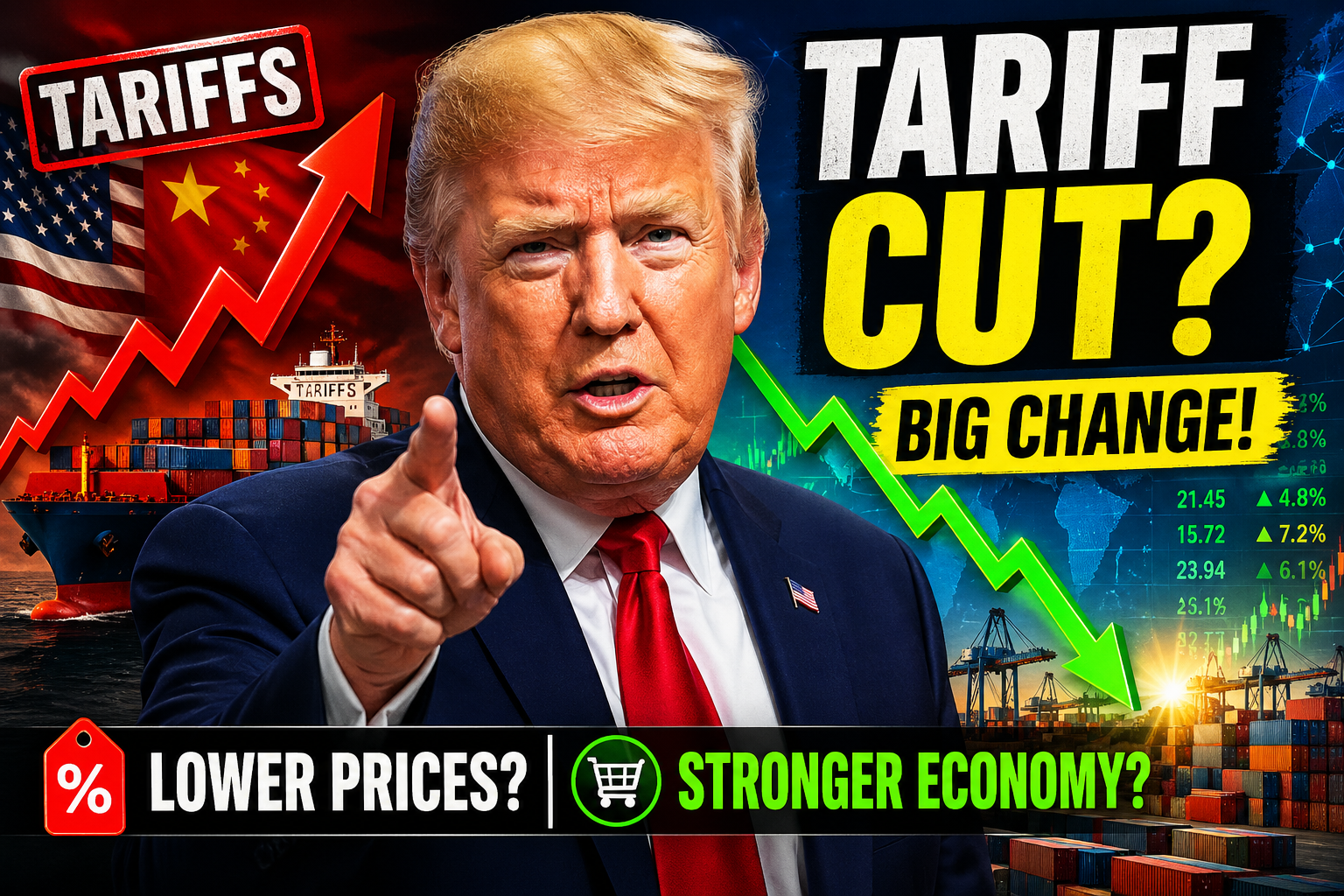
In a statement that’s quickly gaining traction across financial circles and political commentary, Donald Trump has hinted at a significant reduction in tariffs if he returns to the White House.
At first glance, this might sound like just another campaign talking point. But in reality, this single idea has the potential to reshape global trade, influence inflation, redefine supply chains, and directly impact everyday consumers.
So what’s really going on here—and why should you care?
This deep-dive breaks it all down in a way that goes beyond headlines.
Understanding Tariffs: The Backbone of Trade Wars
Before we explore what might change, it’s essential to understand what tariffs actually do.
A tariff is a tax imposed on imported goods, making them more expensive compared to domestically produced items. Governments use tariffs strategically to:
- Protect local industries from foreign competition
- Encourage domestic manufacturing
- Penalize unfair trade practices
- Generate government revenue
During Trump’s presidency (2017–2021), tariffs became a central economic weapon, particularly in the U.S.–China trade conflict.
A Quick Look Back: Trump’s Original Tariff Strategy
Trump’s previous approach to tariffs was aggressive and controversial.
Key Highlights:
- Imposed tariffs on hundreds of billions of dollars worth of Chinese goods
- Introduced steel and aluminum tariffs affecting allies and rivals alike
- Triggered retaliatory tariffs from countries like China and the EU
- Reshaped global supply chains
Supporters argued:
“Tariffs protect American jobs and reduce reliance on foreign manufacturing.”
Critics countered:
“Tariffs are essentially taxes paid by American consumers and businesses.”
Both sides had a point—and the economic effects were mixed.
What’s Different This Time?
Now, Trump is signaling something unexpected: tariff reduction instead of escalation.
While details remain vague, the shift suggests:
1. A More Flexible Trade Strategy
Instead of blanket tariffs, the approach may lean toward:
- Targeted negotiations
- Bilateral trade deals
- Strategic economic leverage
2. Inflation Awareness
With inflation still a major concern globally, lowering tariffs could:
- Reduce costs on imported goods
- Ease pressure on supply chains
- Improve purchasing power
3. Political Repositioning
This shift may also be designed to appeal to:
- Businesses burdened by high import costs
- Middle-class consumers facing rising prices
- Global investors seeking stability
Why This Matters Right Now
Timing is everything.
The global economy is currently navigating:
- Post-pandemic recovery
- Inflationary pressure
- Supply chain disruptions
- Rising geopolitical tensions
Tariffs sit at the center of all these issues.
A reduction could act as a pressure release valve for multiple economic systems simultaneously.
The Economic Impact: A Layer-by-Layer Breakdown
Let’s examine how tariff reductions could affect different sectors.
1. Businesses and Corporations
Lower Input Costs
Companies relying on imported materials—like electronics, machinery, and textiles—would benefit immediately.
Example:
A U.S. company importing components from Asia could see:
- Reduced production costs
- Improved profit margins
- More competitive pricing
Increased Competition
However, there’s a trade-off.
Domestic manufacturers who previously benefited from protection may face:
- Cheaper foreign alternatives
- Pressure to innovate or cut costs
Investment Confidence
Markets typically favor predictability. A move toward lower tariffs may:
- Encourage foreign investment
- Stabilize long-term business planning
2. Consumers: The Hidden Winners (and Risks)
For everyday people, tariffs are often invisible—but their effects are not.
Potential Benefits:
- Lower prices on electronics, appliances, and clothing
- Increased product variety
- Better quality due to global competition
Possible Downsides:
- Job losses in protected industries
- Wage pressure in manufacturing sectors
In short, consumers may save money—but the broader economic trade-offs could be complex.
3. Small Businesses
Small and medium enterprises (SMEs) often struggle the most under high tariffs.
Why?
Because they:
- Lack negotiating power
- Have tighter profit margins
- Depend heavily on affordable imports
Lower tariffs could:
- Level the playing field
- Enable expansion
- Encourage entrepreneurship
4. Global Trade and Diplomacy
Tariffs are not just economic tools—they are political signals.
Reducing tariffs could:
- Ease tensions with major trading partners
- Reopen stalled negotiations
- Strengthen alliances
Countries affected by previous tariffs may respond positively, potentially leading to:
- New trade agreements
- Reduced retaliatory measures
- Increased cooperation
The China Factor: The Biggest Variable
Any discussion about tariffs inevitably leads to China.
During Trump’s presidency, tariffs on Chinese goods were a defining feature of U.S. policy.
If tariffs are reduced:
Possible Outcomes:
- Improved U.S.–China trade relations
- Lower costs for American importers
- Renewed dependency concerns
However, it’s unlikely tariffs would disappear entirely. More likely, we’d see:
- Selective reductions
- Strategic economic positioning
Inflation, Interest Rates, and the Bigger Economic Picture
Here’s where things get particularly interesting.
How Tariffs Affect Inflation:
Tariffs increase import costs → businesses raise prices → consumers pay more.
Reducing tariffs could:
- Lower inflationary pressure
- Support central bank policies
- Increase consumer spending
This makes tariff policy closely linked with decisions by institutions like the Federal Reserve.
Supply Chains: A Potential Reset
The pandemic exposed major vulnerabilities in global supply chains.
High tariffs further complicated things by:
- Forcing companies to relocate production
- Increasing logistics complexity
- Raising costs
Lower tariffs could reverse some of these effects:
Expected Changes:
- Re-globalization of supply chains
- Increased efficiency
- Lower production timelines
However, companies may remain cautious, balancing globalization with resilience.
Political Strategy: More Than Just Economics
Let’s be clear—this move is not purely economic.
It’s also political.
By hinting at tariff reductions, Trump may be:
- Addressing inflation concerns among voters
- Appealing to business leaders and investors
- Differentiating from current policies
This creates a broader narrative:
Economic strength through strategic flexibility rather than rigid protectionism.
Market Reactions: What Investors Are Watching
Financial markets are already responding to the possibility.
Sectors That Could Benefit:
- Retail
- Technology
- Automotive
- Manufacturing (import-heavy segments)
Potential Losers:
- Domestic producers reliant on protection
- Industries shielded by tariffs
Investors will closely monitor:
- Policy announcements
- Trade negotiations
- Economic indicators
Risks and Uncertainties
Not everything about tariff reduction is positive.
Key Risks:
- Weakening domestic industries
- Increased reliance on foreign production
- Political backlash from protectionist groups
Policy Uncertainty
Without concrete details, businesses remain cautious.
Markets dislike uncertainty—and until specifics are announced, volatility may continue.
Expert Opinions: Divided but Insightful
Economists are split.
Pro-Reduction View:
- Encourages economic efficiency
- Lowers costs
- Boosts global trade
Anti-Reduction View:
- Risks domestic job losses
- Weakens national industries
- Increases foreign dependency
The truth likely lies somewhere in between.
What Happens Next?
This is still a developing story.
Here’s what to watch closely:
1. Policy Details
Will there be:
- Full tariff rollbacks?
- Sector-specific reductions?
- Conditional agreements?
2. International Response
How will:
- China react?
- The EU respond?
- Emerging markets adjust?
3. Domestic Reaction
Watch for responses from:
- Labor unions
- Manufacturing groups
- Business associations
Long-Term Implications: A Shift in Economic Philosophy?
If implemented, this policy could signal a broader transformation:
From:
- Protectionism
- Trade wars
- Economic nationalism
To:
- Strategic globalization
- Negotiated trade frameworks
- Balanced economic policies
This would represent a major shift—not just for the U.S., but for the global economy.
Final Thoughts: A Defining Moment for Trade Policy
Trump’s hint at tariff reduction may seem like a small statement—but it carries massive implications.
It touches:
- Global trade dynamics
- Consumer prices
- Business strategies
- Political narratives
Whether this becomes actual policy or remains campaign rhetoric, one thing is certain:
Tariffs—and how they’re used—will remain a defining issue in shaping the future of the global economy.